Monday, 6 February 2017

The Purpose of the Music Video

This essay will be an analysis of the emergence of music videos and the way they have evolved since they were created. There are many types of music videos that span out across the many genres of music- each fitting their respective category better than others. The first kind of music video that was every really used, was in the early 40's when Jukeboxes would play short videos along with music. A decade later, Hollywood began to take music stars such as Elvis Presley and featured them in films, spawning the 'Rock'n'Roll' film. In the 70's, musicians began to perform live on TV and broadcast their music to thousands of people. In the year of 1981, MTV which, at the time, was the only music video channel on television, was created. The first video to air on this channel was the video for the song 'Video Killed the Radio Star' was made in 1981, by The Buggles.

Promotion of Artists and Directors


Within music videos, artists can be promoted through the work. This is when the singers or band are included within the video, either in a main role or even just a cameo. An example of this would be in the music for The White Stripes song 'Seven Nation Army'. In this video, Jack and Meg White are seen playing their respective instruments, in a mix of visual effects and lights. This use of the musicians allows their fans to see the people behind the music and promotes their image. If they were to use actors, people may not realise and could mistake the actors for the actual musicians. 


As well as artists, directors can be promoted through a music video. This is when the video is somewhat equally or even more memorable or recognisable than the song itself, due to its style. An example of directors being promoted through a music video is the video for Tame Impala's song 'Feels Like We're Only Going Backwards' directed by Joe Pelling and Becky Solan. Although these two are not huge, well known directors, this video that they created for this song is very well received and praised by fans. These directors were previously known for their weird, experimental YouTube video 'Don't Hug Me I'm Scared' that was released in 2011. This combination of Pelling and Solan's strange visual style along with Tame Impala's psychedelic music, works well.


Producer's Strategies


When a music video is produced, the artists and video are marketed by a producer in order to gain popularity and sales. Certain artists are promoted differently for many reasons such as style, popularity and genre. An example of a mainstream artist would be Justin Bieber, who already has a large following and popularity, so marketing isn't as vital when it comes to his music. Although some teasers or promotional material such as album covers or clips from music videos will be released which happened when his song 'Boyfriend' was released.


Independent bands and artists are different to mainstream artists, as they do not have the same publicity and popularity. This means that they have to rely on their record labels to create a music video for them, in order to get their music out on more platforms and to be seen by more people. These kinds of artists are most likely to be seen on YouTube or Itunes, than MTV or any mainstream form of entertainment. For example, the band The Carnabys had their song 'Elizabeth', funded by their record label, Four Horsemen Records.


In a similar situation, are self-producers who are artists that are not signed to a record label and have to promote themselves and create a music video independently, through their own money or in some cases a crowdfund. These videos would be released on platforms such as YouTube, Vimeo and Itunes due to their large user counts and easy access. An example of this would be Post Malone's song 'White Iverson'  which cost around $5,000 of his own money to make, but has been viewed over 200 million times on YouTube since its release.


Extension of Artist and Record Label Income


Extension of income is what happens when a music video is made, as is increased the profit and income of the artist and record label, due to more traffic being led to the video in addition to listening to it on the radio or other non-visual mediums. This allows money to be made from two different mediums at the same time, which essentially doubles the amount of money they make from the royalties and sales. This only really works in theory as it is extremely hard to track to exact number of people watching a video or listening to a song, due to the rise in popularity of people pirating or re-uploading an artist's video. An example of this would be Pikotaro's song 'Pen-Pineapple-Apple-Pen' which was released in late 2016. This song became a huge success and was seen globally, and was then re-uploaded thousands of times, rendering it near impossible to find the original video posted by Pikotaro himself, whilst all the re-uploads gain views and traction, which in turn makes them money instead of the artist.


Extension of Platforms/Outlets


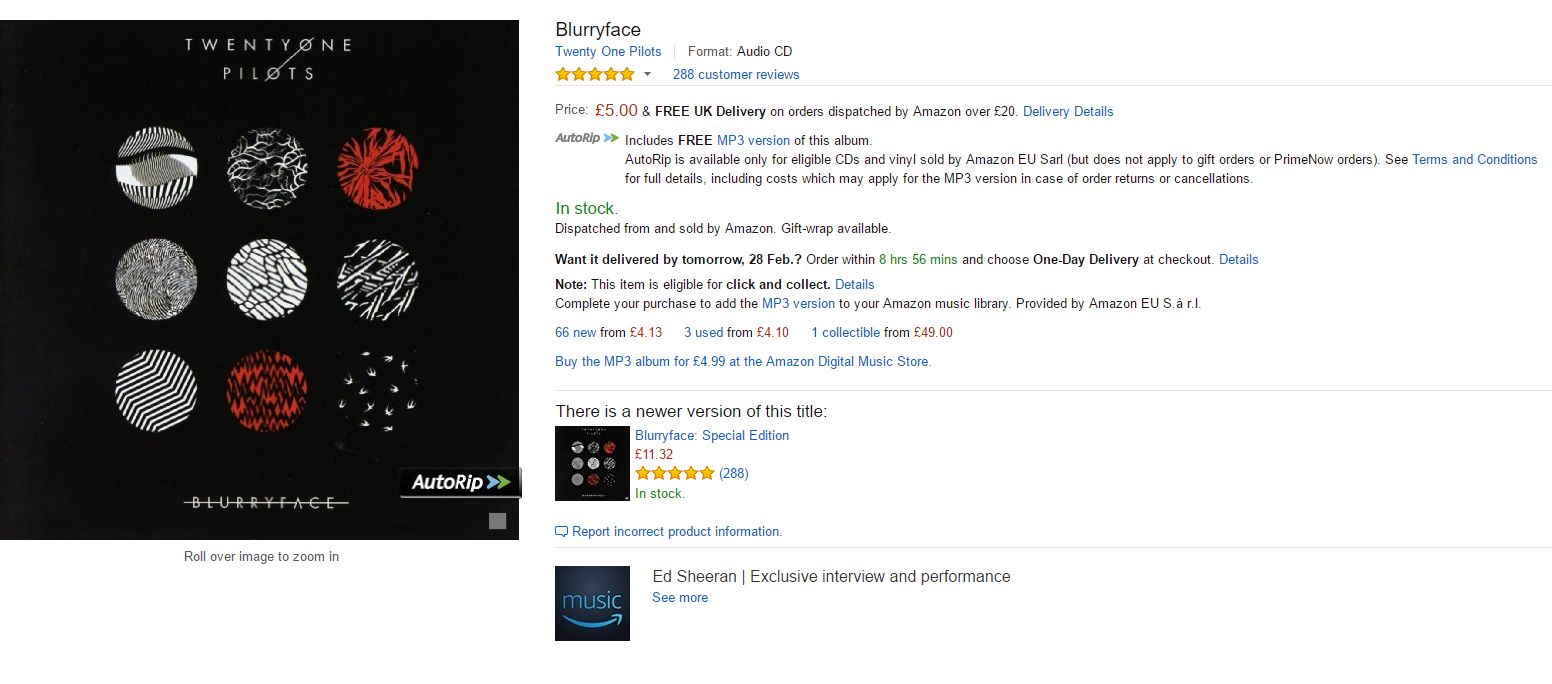
With music, there are many platforms to release and promote the work. Sites such as YouTube and Vimeo allow videos to be uploaded for free, and have the potential to be seen by hundreds of people around the world. As well as this, outlets like Itunes also allow music to be shared easily for a relatively cheap fee, but again, the artist has a potential to make all that money back, as well as a profit. Though these are good, accessible options, they all have their pros and cons. YouTube for example is free, but is not always a sure fire way to get noticed and grow a career. The same goes for Itunes, although with the initial fee for uploading the music, there is a chance to not make the money back and not attract an audience. For example the album 'Blurryface' by Twenty One Pilots is on several outlets like Amazon and Itunes. 


Synergy

In the media industry, synergy is when products in relation to the main product such as a song, are made. For example, action figures, clothing and phone cases are some of the things that are often sold to promote a song or film. A recent example of this would be the film Suicide Squad, which had a soundtrack made up of several different mainstream artists such as Wiz Khalifa, Skrillex and Twenty One Pilots. The song created by Skrillex for the soundtrack, named 'Purple Lamborghini', included the film's actor Jared Leto, as his character the Joker. This was tied into the promotion of the film, as merchandising for this extremely popular character was a safe bet to make money, which was done through the release of many different variations of figures, clothing items and other accessories that included his image to promote the song and film.


Conclusion


I believe music videos are important as they allow a visual representation of the music to be created, giving a director the chance to create an experience to co-exist with the music in harmony, which can enhance the entertainment factor a lot, in my opinion. They also give a chance to allow artist to promote themselves and grow through different mediums.


Monday, 16 January 2017

Current Practices In Corporate Video

Within this essay I will be going through each of the current practices of corporate video and giving their definition. These practices are important for every director and creator to be aware of, as they form the mold for what a corporate video should be. I will be discussing rules of copyright, ethical issues, privacy policies and other such topics.

Copyright

Within the media industry, copyright is a substantial issue that effects near enough every creative decision that is to be made on a production, whether it be to include different brands or a certain soundtrack within the video. It protects people's work from being stolen, being used outside the fair use law or without any permission from the creator. If the copyright law is broken, it can result in being sued or taken to court, as well as losing the content that the copyright breach took place in. There are different ways to follow copyright laws, such as creating original music for the video or buying the license to use a pre-existing piece of music. A good use of copyright laws being followed  within corporate video is in a video for 'Strongbow'. In this video, they use the song 'In the House, In a Heartbeat' that was created for the movie '28 Days Later'. For the video Strongbow made, they bought the license to use the song for profit.


Privacy


Privacy is a priority that corporate media companies take into consideration. This makes sure that certain information isn't seen. Privacy can be broken if you film people and/or use heir name, without their express permission. For example if you are filming in a public area such as a park, you would have to ask each person for their permission to use the footage. This rule is in order to guard people's identity and for younger people, it is used for safety. If the rule is broken, it can end in being taken to court or being given a fine, along with losing or editing the footage. 


Defamation

Defamation is the process of intentionally or unintentionally damaging the reputation through a piece of media. This is relevant in corporate video, as directors can include interviews or certain footage of a person that presents them in a negative light, therefore giving the audience a negative impression of the person which could harm the business' public relations. This can be avoided by asking the hiring company or the interviewees if the footage seems suitable for the video or not.

Fair Use

Fair use is the the use of copyrighted material, which is material that is allowed to be used in a certain way, either with a certain portion of it being used or the format in which it is used. You do not need express permission to use it, as long as it is used for a ''transformative'' purpose- this is when you are either commenting on, criticizing, or parodying the material. If you break the guidelines and rules of fair use, it could lead to a fine or the original creator asking you to remove it from the video.

Ethics


Types of Briefs

James Paget Pre-Production Paperwork


Thursday, 8 December 2016

Research Dossier

Film Festival 

Norwich Film Festival is a competition held in Norfolk that offers winners of five different categories - best short films, best animated film, best student film, best documentary and best screenplay. They reward each winner with £200.

  •  All screenplays must be in English
  • Entry Fees must be paid at the time of submission
  • Entries must be 25 minutes or less
  • Screenplay submissions must be 30 pages or less
Screenplay Analysis

The dialogue in this scene allows the characters to be portrayed in a realistic way. Soo Lin is shown to be the caring, knowledgeable character whereas Andy Galbraith is made out to be a shy person. The way Soo Lin talks about the tea pot shows that she really enjoys and cares about her job and the history that surrounds it. The words that are used within the scene directions also support this, such as the word 'offers', showing she is kind towards others and trusts them to handle the artifacts. The scene directions also sell the location very well. Its easy to picture the museum from just reading the script. There is good detail of the environment and the busy crowds of the space around Soo Lin.


Short Films


Black Swell- This is a short film made by Jake Honig. This film is based around suicide and being alone. I like this short film because it uses minimalist dialogue and allows actions to speak louder than the words. The inner presence of the characters is shown, as they are both suicidal but neither of them every say a single word to suggest that this is the case. The way they don't smile and they mope around, gives a sense of sadness that doesn't have to be directly explained- revealing his inner presence. When dialogue is taking place, it builds tension and allows you to delve into the characters. One of the characters is older man who an ex-teacher and he has a short temper. The other character is an ex-student of his, who is lonely and desperately wants to have some connection with someone. The way the world of this screenplay is presented within the film, suggests that the writer knew what he wanted the setting to be like- the scene directions and descriptions were clearly explained in great detail to get the end result that it did. The night's darkness and sea breeze reflects the characters minds, as they are being swallowed and muddled with the dark thoughts of suicide.


Code 8- This is a short film made by Jeff Chan. This short film is based around a world that oppresses people with special ablities. It is better than Black Swell in terms of dialogue, as it includes more- it allows you to get closer to each character in the short amount of time. The main character Robbie Amell has dialogue that shows he cares about the people he is close with. The scene directions also support this as at the beginning we see him being a family man towards his brother and mother.


Audience Research


This is the survey I created in order to gain audience feedback and opinions surrounding my script and film concept.

Create your own user feedback survey


From the research I can see that around 70% of the people that answered, had some form of interest towards dramas (the genre of my film). This gives me confidence that my film will reach a core audience that is fairly large in comparison to other genres. 

Some of the responses I got suggested that people enjoy dramas because of the connection they get to the characters whilst watching. This is good for my film, as the story is heavily invested in my character's family issues and how it is affecting his current situation. The survey responses also point out that the story line is also a big part of why the audience likes the genre of drama, as they are often more grounded in reality than a lot of other genres are, such as horror or Sci-Fi, meaning we can immerse ourselves in the world and can imagine what our emotional response would be towards the situation.

Although the majority said yes, I had a few people say they wouldn't be very interested in watching a film based around a broken father-son relationship. I am going to go along with the majority and stick to that relationship dynamic, but I will try to include other elements to interest those that aren't as interested.


Theme


The theme of my short film is going to based around the need for family and how family is important. This theme is one that near enough everyone can relate to and therefore can become committed to the story. As well as this, it faces the theme of loss within the family on several different levels, one being Dean's mother dying, the second being the father leaving and the third being the brother passing away years prior. This allows a connection to be made with the characters as most people can empathise with death and grief.

In my narrative, there is a lawyer character. As the writer, not knowing much about the legal side of the topics in the story, i had to research the process of dealing with a death as well as how property ownership works within a divorced family, in order to make the story as realistic as possible. When a couple are divorced, they can legally negotiate on what happens to their property, such as splitting payments or selling it, but once a decision is made there will be no support in court if you decide to breach the agreement.

Existing Text

A main piece of media that I find to be most similar and the most inspiration to my story is the Disney film 'Finding Nemo' due to its theme of family and loss. My story, similar to 'Finding Nemo', focuses on a family dynamic that ended on a negative, being reunited and restoring the positive. As well as this, 'Finding Nemo' is a drama, that allows people of all ages to be affected by the events of the film, as many people can relate to loss in the family.

Bibliography

https://www.moneyadviceservice.org.uk/en/articles/protecting-your-home-ownership-rights-during-divorce-or-dissolution
http://www.muchloved.com/gateway/death-of-a-loved-one.htm
http://www.norwichfilmfestival.co.uk/
http://www.shmoop.com/finding-nemo/family-theme.html